
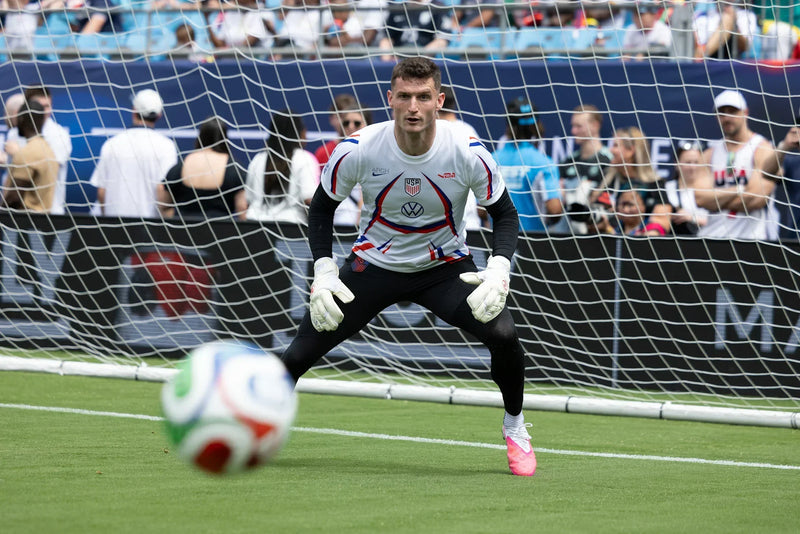

On a broadcast of the 1992 Winter Olympic games a hockey commentator stated, “I will never figure out goalies. Some day I’d like to do a study [on] goalies…Goalies are justdifferent–they march to the beat of their own drummer.”
While at Stanford, playing water polo and studying Human Biology, I did just this: I conducted research on the psychology and sociology of goalkeepers in various sports as the focus of my Honors Thesis. Armed with this information, and now with 26 years coaching water polo and conducting Bowen Goalie Clinics on a weekly basis throughout the country, I can assert that, yes, goalies are different…somewhat.
A more interesting question for me is the chicken-and-egg conundrum, couched in the nature/nurture debate: Does being a goalie cause someone to develop a “different” disposition (nurture), or, does being of a unique, “different” disposition draw one to goalkeeping (nature)? As with most of the human condition, when considering the effects of nature and nurture, it’s almost always a bit of each..
This is both good news and bad/frustrating news for coaches and goalies. On the one hand, I realize it would be nice to have a checklist with indicators one could tick off and then discover the next All American goalie during Week One of their career. There are certainly some general features most top goalies share (see below) but nothing exact. On the other hand, this is good news for aspiring goalies: You don’t need to fit into a particular box but, instead, can “make yourself” and become the goalie you want to be.
Having now coached approximately 300 youth and high school goalies who then went on to play in college, along with my own research, successful goalies do maintain some overarching qualities. First off, contrary to the “old school” method of goalie selection, gone are the days when coaches throw the slowest player into the goal. If anything, the trend has shifted towards getting the best athlete into the goal. Think of it this way: A top goal scorer may score 3 goals per game, but a top goalie makes 10 saves per game, with at least 3 of those being saves less skilled goalies would not have made. Goalies often don’t receive the press afforded top goal scorers, so this point is important to keep in mind when selecting a goalie.
Here’s where it gets tricky. Because, for me, at this point in my career, I’m more aligned with the “I know it when I see it” approach to goalie evaluation. Even at a young age, it’s apparent to me when a youth goalie has what it takes to play at the highest level in the years to come. But this isn’t of much help to coaches (Just ask Jack!).
In short, here are some general qualities to look for:
-a strong sense of confidence as goalies “fail” frequently (by virtue of their being scored on–a failure in the eyes of many observers even if the fault was not the goalie’s) with their failure on display for all to see;
-an ability to remain calm under stressful conditions and, even, to embrace such situations: for example, many consider the penalty shot terrible for the goalie, but top goalies instead view this as an opportunity: after all, we know where the shot’s coming from and when it’s being taken, with the real pressure on the shooter;
-a strong work ethic: Goalies, in part, are only as good as their fundamentals and technique formed by intensive, focused training, all founded on an explosive, well-conditioned eggbeater built only by exceptionally grueling leg conditioning. And, as is often the case, goalies are left on their own to train while coaches focus on the majority of the team, the non-goalies;
-decisiveness: Much of the time, goalies don’t have time to think through what to do so then need to act quickly without hesitation and trust in themselves;
-assertiveness: Despite many people viewing goalies as more passive and simply reacting to the game, top goalies are actually quite the opposite. They come off their goal line to challenge shooters and reduce their shooting angle, they command the defense such that the offense has only limited opportunities (all of which the goalie knows), they come out for steals or feign a steal to cause the offensive players to pause and rethink their attack, and much more.
This is just a short list but a good starter for the “identification” (and, even, evaluation) component of coaching goalies. I’m often asked about good methods for evaluating goalies using statistics and some form of sabermetrics. This, I find, to be tricky and not wholly useful. As I mentioned earlier, for me as a coach, I can just sense good goalkeeping by watching a goalie play.
As a useful adage: About 5 years ago, I sat with a college coach considering recruiting a high school goalie who was the backup goalie on his team. So this coach had to watch this goalie in warmups knowing he wouldn’t play in the game. I’d had lots of good things to say about this goalie, nudging the coach to recruit him. Then, in the 15 shots he took during warmups, they scored a majority of them. I sunk into my seat worried this coach would think I’d missed something. Instead he turned and said, “Yup, that’s my goalie” and offered him a spot following the game. This coach saw something in the way the goalie played–his positioning, his fundamentals, explosiveness, balance, quickness, reaction to failure–yet the spreadsheet would have said quite the opposite.
If you must choose a statistic, here it is: Goals Against. This, really, is theraison d’etreof the goalkeeper. In short: I don’t care how you do it, keep the ball out of the goal. Some do this by making great saves, others by coming out for steals, others by organizing the defense appropriately, and others by their positioning and forcing shooters to take their secondary shot or, better, no shot at all.
Additionally, the offensive component needs to be accounted for, especially as a huge portion of the offense at higher levels comes from the counter attack: goalies need to be like a quarterback who can read the offense and make perfect long-distance passes–my funny-because-it’s-true joke for goalies is that I “allow” them 1 errant pass per season; just one.
Currently, my team has 2 goalies who I consider to be essentially exactly equivalent, despite my telling coaches all these years, “goalies are never equal.” To try to shed light on this competition for the starting spot on our team, I tried “spreadsheeting” 2 goalies: something I’ve never done. In practice during scrimmages, I’d have the goalies play 2 quarters for each team so they’re playing for and against the same teams, and in games they’d each play half, alternating who started the game. I tracked the obvious: goals against and saves. But I also added a few more nuanced sub-categories: “good” saves (saves I wouldn’t expect most goalies to make) and “bad” goals (goals that an average goalie needs to make); and also “good” passes (a pass that was exceptional both in the read made by the goalie as well as the placement) and “bad” passes (a pass that was either stolen or was so poor it caused the team to lose the advantage on the counter-attack).
After doing this with my 2 goalies over the course of 8 games and scrimmages, they essentially tied, with each goalie “winning” 4. So, in a way, this reflected to me with data that I was seeing this correctly: they really are evenly matched goalies. But, as I shared with these two goalies, I didn’t like this approach–it felt too sterile and, also, the last thing I want for a goalie is to feel like they’re performing under a microscope with every action being recorded. That’s no way to get into theflow of goalkeeping, which is an important part of good goalkeeping, and it also ignored a lot of the aforementioned unquantifiable things good goalies do to keep the ball out of the goal.
I hope this reflection is at least partially helpful to coaches (and goalies) as they’re building their respective teams and evaluating athletes and potential goalies. It’s worth adding here, that coaches should pay attention to goalies whowant to play goalie–i.e. In answering the chicken-egg question there’s certainly something to be said for finding that “different” athlete who wants to do this entirely different skill and take on the challenge so unique from the other athletes on the team.
Every time I get in the goal–whether it’s with my own high school team, at a clinic, or now, playing in Masters Nationals–I’m reminded of just howfun it is: so many moving parts, varying levels of activity and motion happening with opposing offenses, organizing my defense accordingly, reading shooters while attending to drivers and picks out of the corner of my eye, then making that big save and leading my team on the counter-attack with the perfectly placed outlet pass. And then a few seconds of rest while my “different” teammates attack, before I call them back to defense we get to do it all over again.
-Jack Bowen
Menlo School Water Polo Coach, Author, & Head of Bowen Goalie Combines
Author of 5 books in Philosophy and Sport Ethics


