

0

Your Cart is Empty

  • Hey Curling, It’s Not You It’s Us: The Silliness And Seriousness Of Sports- By Jack Bowen

    February 04, 2026 5 min read

              One of my favorite diversions during the Winter Olympics involves tracking the popular opinion of curling…in the United States. The overriding conception seems to be that it’s just plain silly. A New York Post article declared curling the “weirdest” Olympic sport and a Google search of “curling is the…” yields the top two results, “…dumbest sport ever,” and, “…stupidest sport.” A 2010 episode of The Simpsons parodies curling with Homer pontificating, “They come here on Saturday night to sweep the ice? Losers.”

               In American culture, the sport/game/activity of curling is “weird.” It’s not common: people sliding big rocks—“stones”—along the ice while teammates frantically sweep, steering the stone towards a specific spot. 

               But before we cast stones, it’s worth looking at our own culture’s celebrated activities.

    Your sports (and mine) are silly too

                Take baseball, for example, commonly heckled as “weird” by those around the world: People hitting a ball with a stick and then run around a diamond-shaped pattern. Then golf: Participants use awkwardly bent sticks to hit a ball down a stretch of grass into a hole. And on Sundays, millions watch groups of men try to get a ball made of pig epidermis onto a particular patch of grass. Silliness abounds, with track-and-field athletes running around in circles and throwing sticks and hammers through the air, and another, from the winter Olympics: skiing through snow and then projecting a bullet through a sheet of paper. 

               Quite a silly group of activities. And aside from the skiing-and-shooting endeavor, their respective practitioners hone rather useless skills outside of their respective arena.

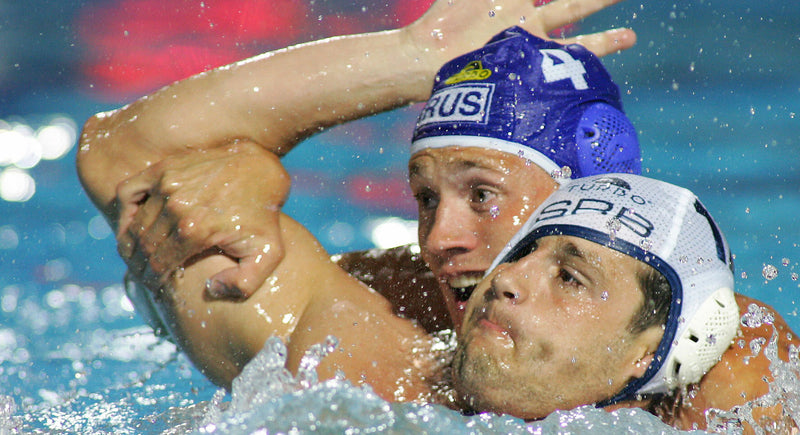
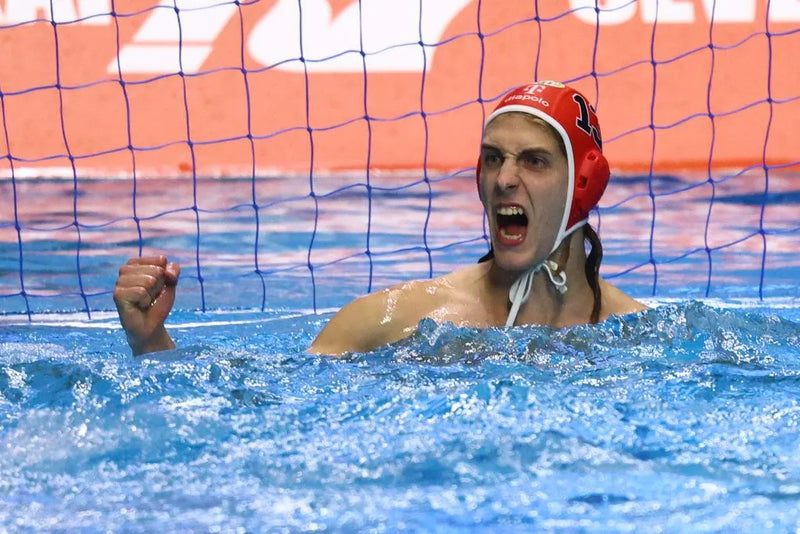
               To avoid seeming as though my own athletic forte eludes reproach…I happen to be (or, at least, was) very good at preventing balls from entering floating rectangles. So good that Stanford University offered to pay for a majority of my education if I promised to keep balls from entering the rectangles on their campus. I happily obliged. Now, after thousands of hours of practice, this skill I possess has afforded very little utility in my life. Though, while on a camping trip in high school, I successfully transported everyone’s gear across a small stream, keeping it off the water just as I did in my rigorous water polo training. And a few years back, I prevented a projectile (wooden block) hurled by my one-year old son from hitting the television. Dad 1; Knox 0. It saved us the cost of replacing the TV, and I think I impressed my wife a bit in the process.

    Climbing into small holes?

                It must be, then, with all of the time, emotion, and resources invested in the sporting institution—especially at the youth level—something lies much deeper than the actual skills being tested. Otherwise, the level of seriousness aligned with activities like throwing a ball through a circle seems rather ill-fit.

                Smith College professor Albert Mosley once made an analogy at a philosophy conference I attended over 20 years ago that has always stuck with me. It has that Monty Python humor to it, though sheds great light on a topic we commonly take for granted, yet with very real ramifications. He has us imagine we lived in a culture which hosted and celebrated Entering Small Holes tournaments. Short people would travel from all over to compete. Young people would devote great portions of their time and resources training to climb into small holes. High-level coaches could recognize talent early, scouting parents who maintain exceptional body types for such ventures—“Oh, yes, his mom and dad aren’t even five feet tall, this kid’s got a real shot at greatness.” Quite silly, indeed.

                Mosley intentionally chose an outrageous analogue to force us to respond, “But what a waste of time. Look what that kid could’ve accomplished if they spent just half that time on their studies. What use will climbing into small holes serve them when they’re forced to retire along with the 99% who don’t go on to the next level?”

                We need to be mindful of this as we continue to set sports schedules, policy, and leagues for children. There’s a point at which focus on silly skills yields diminished returns in the face of what the student-athlete forfeits in order to perfect such skills.

    And on a positive note

                With all of this in mind, we can better frame the sporting experience in a few ways. First, we recognize on one level these sports-related objectives we pursue are not matters of life and death: they encompass play, and even a bit of silliness. As Steven Poole writes in a recent Wall Street Journal review of the book, Seven Games, “Games…make us happy because they need no ‘why’ at all. The best [games] furnish an arena for learning, the pleasurable exercise of skill and a cathartic burst of consequence-free conflict.” So much to be gained from our experience with sports and games of all sorts.

                Secondly, despite all of this—actually, because of it—we must push deeper to recognize the profound fruits available to those who do decide to engage whole-heartedly in the sporting life. The particular sport must be about more than just the stated objective. If you reduce any activity, it can seem pretty silly—the importance of an endeavor lies in the value-framework beneath it. Otherwise, I’m sitting here at my computer all morning just pushing square buttons that make English letters appear on a screen. As such, those who design youth and interscholastic sports leagues are responsible for making sure the focus isn’t solely on the (silly) skills taught and the win/loss column. 

                Finally, curling serves as a reminder for all of us to take a step back before we cast stones. Because curling is equally as silly to some as driving cars around in a circle is to others. But also, it turns out curling really is challenging in its own unique way. That same New York Post article actually bares the title, Don’t laugh: Curling is no joke and considers curling as “one of the hardest” Winter Olympics sports, reminding us, “it looks a lot easier when you’re watching Olympians do it on TV.” Along with that, another top-four result on the aforementioned Google search about curling is that it’s the “best.” The best sport ever. 

              This all provides an opportunity to become a bit more open minded, all the while recognizing some of the silliness in our own preferences, and some true greatness along the way. All the while, allowing a little silliness and playfulness in our own sporting experience.

    -Jack Bowen
    Menlo School Water Polo Coach, Author, & Head of Bowen Goalie Combines
    Author of 5 books in Philosophy and Sport Ethics

    More on Jack Bowen
    Menlo School Water Polo Coach, Author, & Head of Bowen Goalie Combines
    Twitter & Instagram: @1jackbowen
    Websites:
    Water Polo & Goalie Training: https://www.sopenwaterpoloclub.com/about-2

    Leave a comment

    Comments will be approved before showing up.